
Building a Nation on a New Foundation: Meet Economy of Trust Ukraine
In this article
- Ukraine is rebuilding without legacy systems, so digital and physical infrastructure can be designed together from day one.
- 675 mayors are organised into 30 Regional Economic Zones, and seven of them already run a structured project pipeline.
- Capital moves only after CONTRL verifies a milestone against satellite imagery, IoT telemetry and financial reporting.
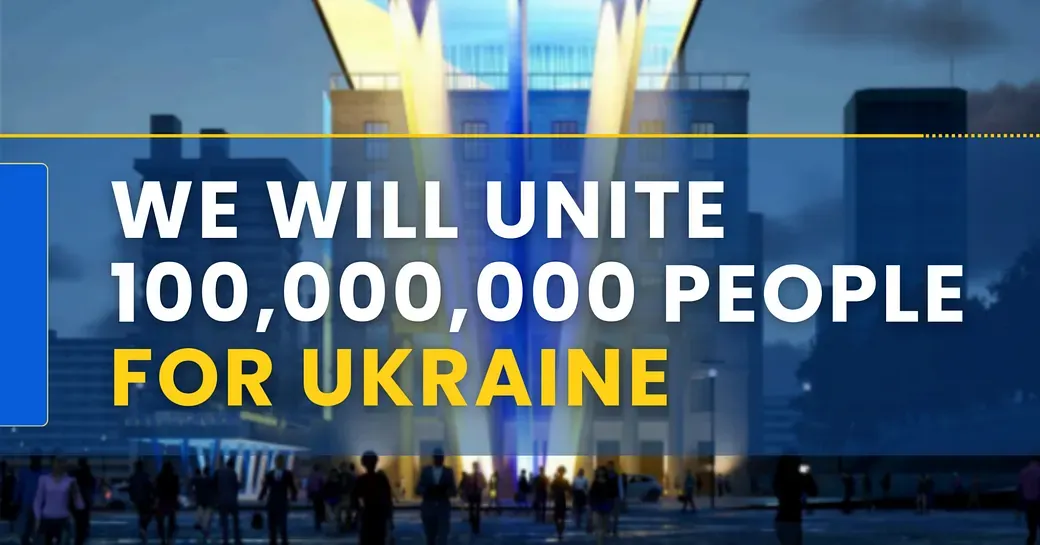
Every so often, a country gets the chance to build itself twice. Ukraine is living through that chance right now, and the Economy of Trust Ukraine (EoTU) exists to make sure it isn’t wasted.
Rebuilding without legacy systems
The scale of the moment is hard to overstate. Ukraine’s reconstruction represents an estimated €800 billion or more in foreign direct investment potential over the next decade, spanning energy, water, waste, industrial base, mobility, communications, real estate, healthcare, and workforce development. But the more interesting story isn’t the size of the opportunity; it’s the shape of it. For the first time, a country of Ukraine’s scale is rebuilding without the burden of legacy systems. Aging grids, analog permitting offices, disconnected municipal databases: none of that has to be inherited. Ukraine can design its digital and physical infrastructure together, from day one, in a way no mature economy could realistically attempt without tearing down what already works.
Why trust is the bottleneck
That advantage only becomes real, though, if the rebuilding itself can be trusted. Post-conflict reconstruction has a familiar failure pattern: money moves, but no one can verify where, why, or with what result. Donors grow cautious. Investors stay on the sidelines. Good projects get lost alongside the bad ones because there’s no reliable way to tell them apart. This is the problem EoTU was built to solve, and its answer starts not in a boardroom but in the town halls of Ukraine’s municipalities.
675 mayors, 30 Regional Economic Zones
EoTU maintains direct working relationships with more than 675 mayors, covering roughly 80% of the country’s non-occupied municipalities, through the Mayors Club of Ukraine. Because Ukraine’s future growth will be driven by decentralized, locally led development rather than central planning, EoTU has organized these municipalities into 30 Regional Economic Zones, groupings of neighboring communities that plan jointly, pool technical resources, and present a single, coherent case to investors instead of competing individually for attention. Seven of these zones, comprising 56 municipalities, are already active in a structured project pipeline, moving from local need to bankable proposal through a defined, three-stage feasibility process.
How companies enter
Companies enter this ecosystem through the Business Coalition, pairing international expertise and capital with Ukrainian execution and market knowledge. It’s a structure built on a simple observation: Ukrainian businesses know how to get things done on the ground, and international partners bring the track record and technology that municipalities and financiers need to see before they’ll commit. Neither side has to figure this out alone.
Who prepares a project, and who checks it
From there, qualified partners advance into the Infrastructure International Coalition (IIC), the division of EoTU that organizes several hundred Ukrainian and international companies into twelve sector-specific Task Forces spanning energy, water, waste, mobility, healthcare, and more. What makes the IIC distinctive is timing: partners help shape a project’s technical specifications during the design phase, rather than bidding on a scope someone else has already locked in. Sweco, Europe’s largest architecture and engineering consultancy, acts as Master Project Manager, carrying each project through a disciplined seven-stage process from initial concept to long-term operation. Alongside Sweco sits CONTRL, an independent governance layer that tracks whether a project has genuinely met the conditions for its next milestone, technical sign-off, financing readiness, and compliance checks, before any capital is authorized to move. CONTRL doesn’t award contracts or approve procurement; it simply ensures that no project advances, and no tranche releases, on the strength of a claim nobody has checked.
Capital that moves on verified milestones
That same verification logic carries into how capital is raised and tracked. DOVEER Exchange is a tokenized capital markets platform built by CONTRL, Sweco, Stobox and EoTU together, giving investors, municipalities, and oversight bodies the same real-time visibility into a project’s progress and its capital flows. Stobox contributes the tokenization infrastructure that turns a vetted, IIC-originated project into a Real World Asset investors can actually access, while CONTRL’s milestone data determines when and how that capital is released. Verification draws on multiple independent sources at once: satellite imagery, IoT telemetry, and financial reporting, rather than a single official’s word, and once a milestone is confirmed, the record can’t be quietly altered. Transparency draws capital; this governance layer is what keeps that capital honest once it arrives.
We are here to walk you through that ecosystem, one piece at a time: the municipalities originating projects, the companies building them, the platform verifying every step, and the people, in Kyiv and around the world, making it happen. The underlying logic is simple, even if the infrastructure behind it isn’t: trust builds projects, and projects build a country’s future.
We’re glad to have you along for it. Join us!
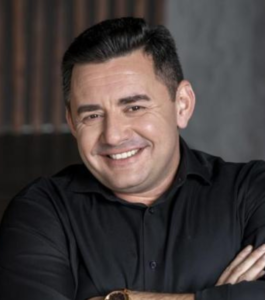
Founder and CEO of Economy of Trust Ukraine and Chairman of the Investment Committee of the Mayors' Club Ukraine. Honorary President of WTC Kyiv.
All posts by Henry Shterenberg →